Common problems / 05
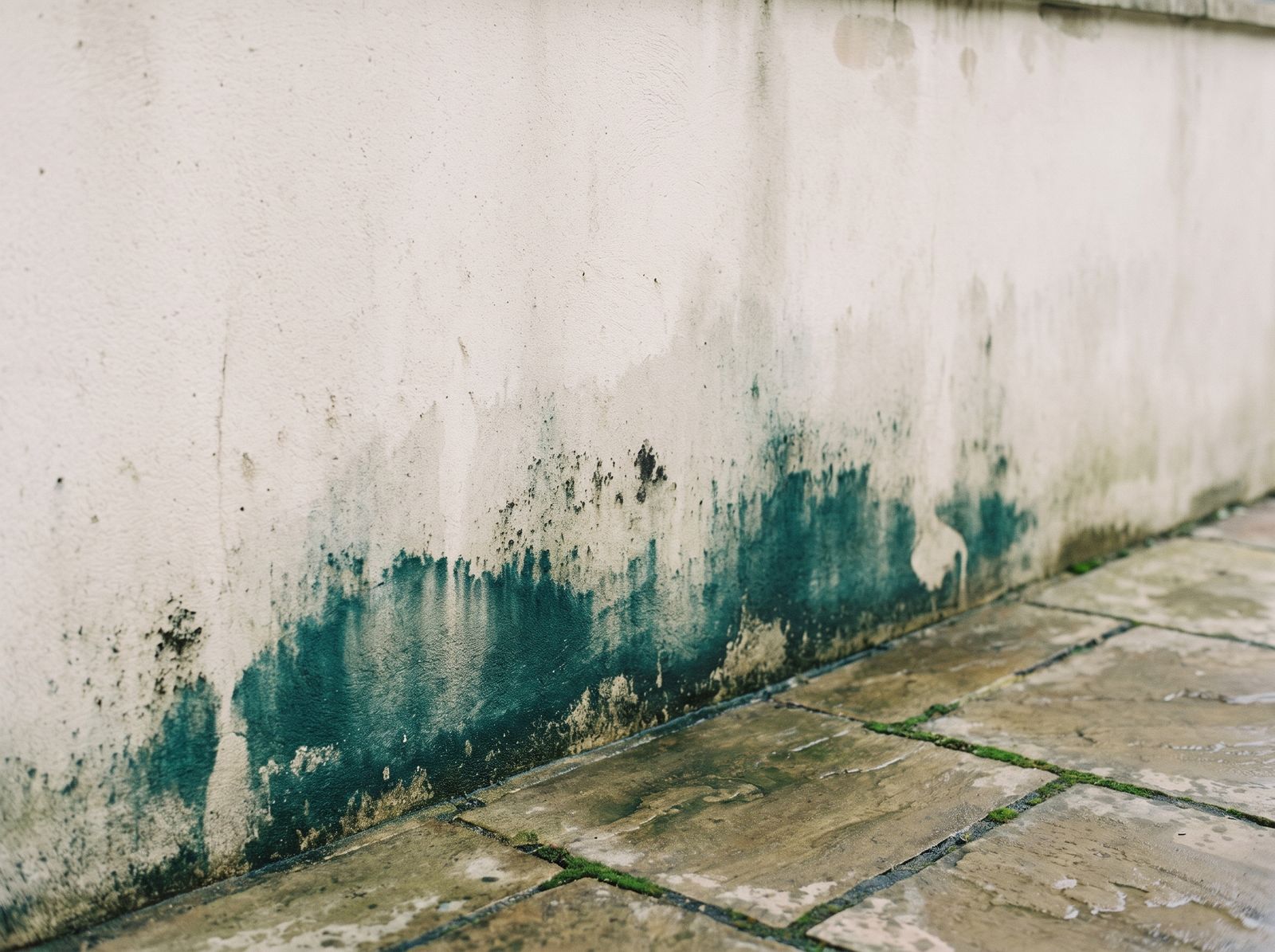
Mold, moss and algae on exterior walls and grounds
Green or black growth spreads on north-facing walls, fences, and floors that get no sun.
Key points
Mold, moss and algae on exterior walls and grounds spread in shaded places that are slow to dry, using dirt left on the surface as a foothold. We wash them off and apply a treatment that makes it harder for dirt to settle, so a foothold is less likely to form. We cannot say that they will stop growing. We also suggest measures such as improving drainage.
01
Possible causes
- Shaded, and slow to dry after rain
- Dirt and moisture left on the surface give mold and moss a foothold
02
What we check on site
- Sunlight, drainage, and where rainwater collects
- The type of material, and how far the growth has spread
We do not decide on the cause, or whether the work can be done, from photographs alone.
03
How we deal with it
- Remove the existing moss and mold by washing
- Apply anti-soiling treatment that makes dirt less likely to settle, so a foothold is less likely to form
- Also suggest measures against the source of moisture, such as drainage
04
What it cannot do
- We cannot say that mold and moss will stop growing. We think that, as dirt becomes less likely to settle, a foothold is less likely to form, but the most we can say is that if they do grow, they are easier to remove
- The anti-soiling treatment is not a biocide
05
Before you try it yourself
Chlorine-based chemicals can change the color of the material or harm plants. Test them in an inconspicuous spot before use.
06
What affects cost and time
It varies with the extent, the height and scaffolding, the material, and how far the growth has spread.
The on-site survey and estimate are free. Where there are costs, such as for distant locations or when scaffolding is needed, the installer in charge will tell you in advance.